Saturday 7th February 2026

dys : hrs : min : sec

Countdown to Conference


2026 Conference Information
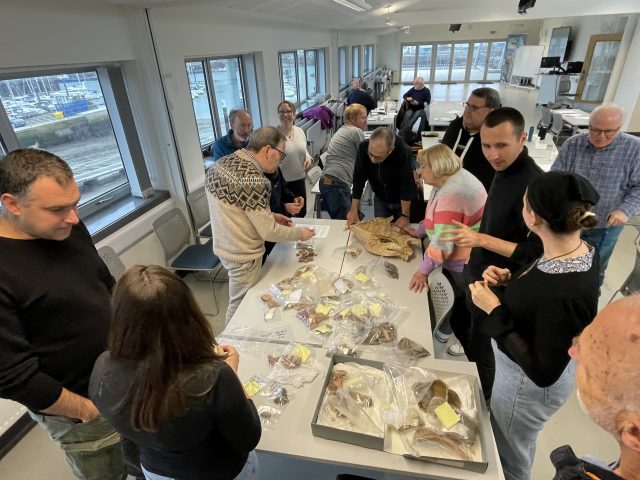

This year’s conference will be held on Saturday 7th February 2026 at the Robins Conference Centre, University of Plymouth. Tickets are on sale from 31st October 2025 

The conference will be followed by the evening dinner at the Crown Plaza Hotel in the Commonwealth Suite – where there will be a hot buffet and a selection of desserts. Buffet options are:

  • Chicken, mushroom and tarragon pot pie
  • Smoked haddock and leek fishcakes
  • Sweet potato and cauliflower currey (vegan & gluten free)
  • If you have any further allergies or dietary requirements please let the organisers know when booking your tickets.

The Crown Plaza are offering 10% off their room rates for conference delegates. Simply book with the hotel directly (tel 0800 890 410) and mention the IMASS conference on 7th February. 

On Sunday 8th February there is an option of two events:
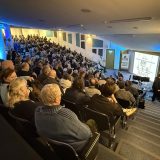
1) The Neville Oldham Memorial Symposium for 2026 will be on bottles and glassware. The workshop will be held at the University of Plymouth Marine Station, from 10 am to 4 pm. The workshop will be run as it has in the past with a morning and afternoon session. You will be able to sign up for this event at the conference or you can register via eventbrite. The workshop is £10, pay on the day.

2) The Sunday Tour will be at ta walking tour of the Barbican at the site of Plymouth Castle .  Please register with Eventbrite if you plan to attend. Payment for the walking tour is on the day. 


Conference Speakers
Rick Ayrton

Henry Clack
Emile Solanki
Alex Hildred
David Mearns OBE OAM
Duncan Ross
Johan Opdebeeck
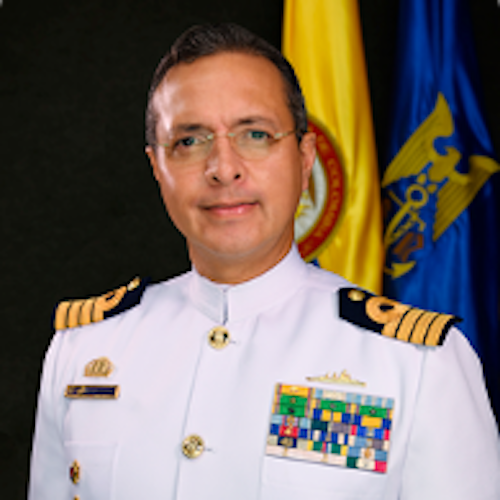
Captain Gustavo Gutierrez

Rick Ayrton

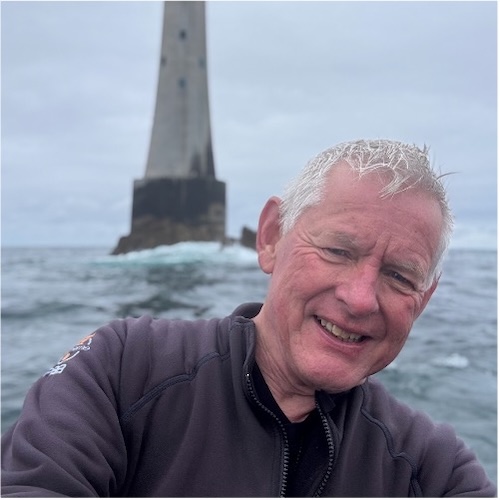
2026 Title: Photographing the Shipwrecks of the Battle of Jutland

Abstract: Diving & Photographing the wrecks of the Battle of Jutland. A long awaited trip to Denmark to visit the iconic Jutland wrecks – conditions were far from ideal, is it still possible to bring home some photos that capture the essence of what lies on the sea bed…

Bio: Rick has been diving since the 1980’s and remains a member of the British Sub-Aqua Club. He enjoys the challenge of underwater photography and is currently chair of the Bristol Underwater Photo Group in the UK, he has had some success in competitions including several awarded images in Underwater Photographer of the Year. His book “Expedition Britannic” was published in October 2021, it has been well received by divers and non-divers alike. A few months after the Jutland trip Rick suffered spinal decompression sickness following a deep mid channel dive, at present future diving activities are on hold.


Henry Clack

Title: Salvaged Silver and State Immunity: the SS TILAWA

Abstract: The talk will discuss the cargo of silver bars carried on board the S.S. “TILAWA” at the time of its sinking by a Japanese submarine during WW2 and the subsequent salvage claim which was brought before the English Courts. Ultimately, the U.K. Supreme Court held that the silver, which was owned by the Government of the Republic of South Africa, was subject to state immunity under the State Immunity Act 1978 and the International Salvage Convention 1989.

Bio: Henry is a Senior Associate at the leading shipping law firm, HFW. Henry specialises in international commercial dispute resolution, with a particular focus on “wet” or Admiralty issues. Henry has worked on a number of complex technical disputes relating to the salvage and wreck removal of both modern commercial vessels and historic wrecks, including “MAERSK HONAM”, “EVER GIVEN” and the cargo ex. “TILAWA”.

Emile Solanki

Title: Salvaged Silver and State Immunity: the SS TILAWA

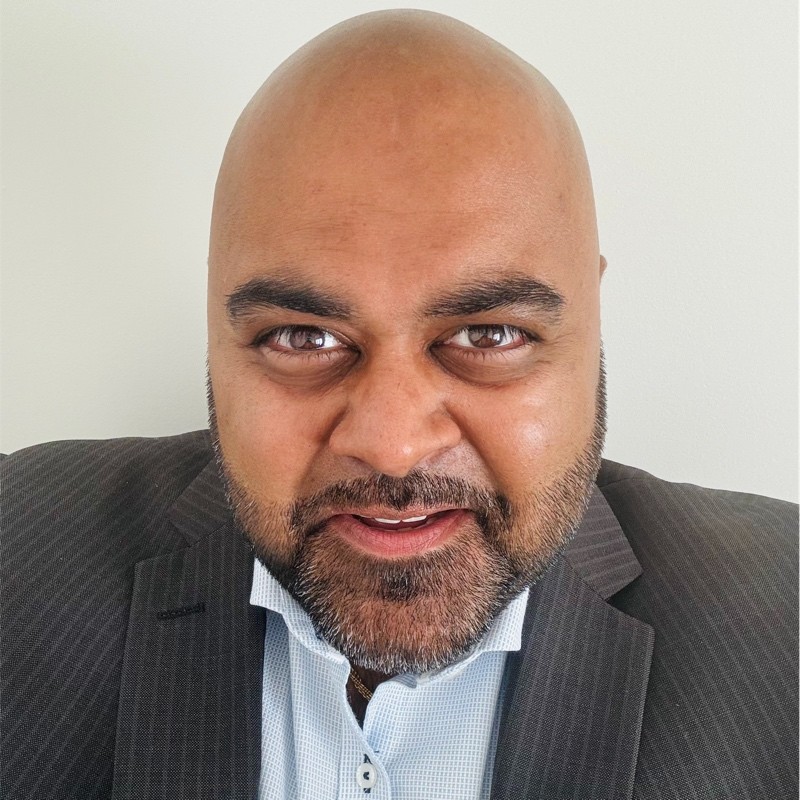
Abstract: During the Second World War, a passenger cargo liner was sunk by the Japanese in the Indian Ocean. 280 people perished. 678 survived after floating for 2 days. Decades later, the wreck, over 4000 meters deep, was visited in 2017 and 2026. In 2017, 60 tons of silver bullion (2,364 bars) was salvaged. For 18 years, with the work of tilawa1942.com, commemorative events, raising awareness, finding survivors and families has globally grown considerably. Learn more about this fascinating ship and its discovery at the 2026 IMASS Conference!

Bio:  Introducing the founder of tilawa 1942, Emile Solanki. Emile was born and raised to Gujarati Indian immigrants from Uganda. Emiles paternal family are from the village of Kachholi India, where there is a SS Tilawa connection. Emile lost his great grandfather to the Tilawa sinking. In addition to Emiles voluntary work with Tilawa1942, his profession is in the life insurance industry, and also historical tourism in the Middle East. For 18 years he has led the charge in raising awareness of the SS Tilawa disaster. Please welcome Emile to tell us more, as he presents: Bringing The Forgotten Tragedy To The World – Update 2026!

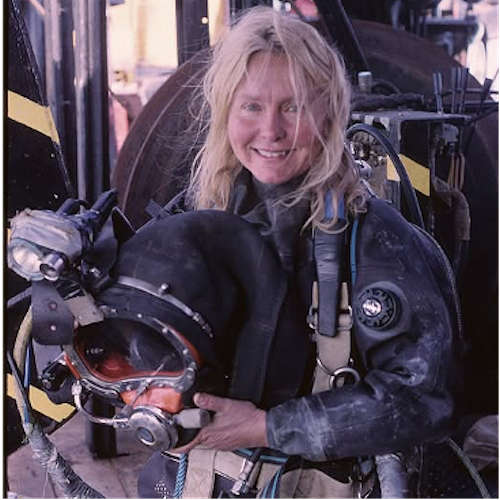
Alex Hildred

Title:  Seabed to Showcase – 40 years on from raising to the evolution of the new Mary Rose museum 

Abstract: A living community and a state-of-the art fighting machine. The catastrophic sinking of the Mary Rose and the miracle of her preservation provides a unique and vivid impression of Tudor life at sea. The talk will focus on the chemical and microbiological research undertaken on some of the crew and how this is presented to the public within the Mary Rose Museum.

Bio: Alex holds the position of Head of Research and Curator of Ordnance and Human Remains at the Mary Rose Trust, having joined the project in 1979 as a graduate archaeologist. Her involvement spans four decades, marked by her integral role in excavating Henry VIII’s warship and an unparalleled commitment to the iconic Mary Rose museum. Alex’s role initially was supervising the excavations (from 1979 – 1982, when the ship was raised, with the world watching), then directing the site monitoring, survey and excavations which culminated in recovering the stem in 2005.

It is acknowledged that many of the techniques of recording, surveying, excavation, artefact recovery and conservation used by Alex and the rest of the excavating team are still used by marine archaeologists today. Indeed, much of the equipment Alex and the team used had never been used in archaeology before– the raising of the Mary Rose was, and continues to be, a ground-breaking endeavour.

2025  – Introducing our new IMASS President, presidential handover

2026 – Seabed to Showcase – 40 years on from raising to the evolution of the new museum 

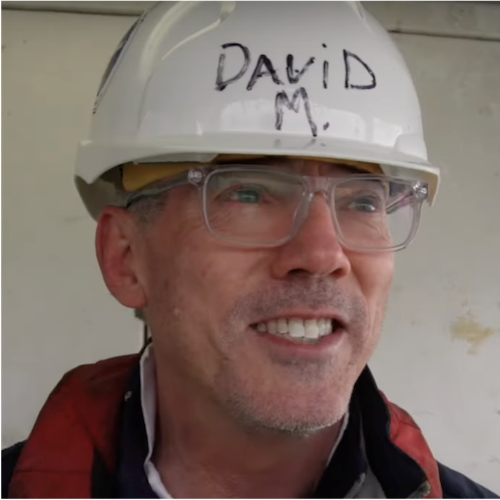
David Mearns OBE OAM

Title:  Finding QUEST: Sir Ernest Shackleton’s Last Ship

Abstract: Sir Ernest Shackleton’s last polar expedition in 1922 was struck by tragedy when the great man suffered a fatal heart attack in his cabin on board his ship QUEST whilst anchored at Grytviken, South Georgia Island.  Shackleton’s death, and the final truncated expedition made by QUEST, marked the end of the Heroic Age of Polar Exploration.  QUEST however continued working for another 40 years, mainly as a sealer, before she was holed by an ice floe and sank off the coast of Labrador, Canada.  A search expedition organised by the Royal Canadian Geographical Society located the wreck of QUEST based on the navigational analysis by a team that also accurately predicted the location of Shackleton’s ENDURANCE lost in 1915 in the Weddell Sea.

Bio: David L. Mearns OBE, OAM is a chartered marine scientist, historical researcher, awardwinning author, and expedition leader of deep ocean projects. He is one of the world’s most experienced and successful deep-sea shipwreck hunters having located 29 major shipwrecks with an overall success rate of 91%. His formidable reputation has been built on a career finding notoriously difficult wrecks that others predicted would never be found or their mysteries solved. David’s most important discoveries include MV Lucona, MV Derbyshire, HMS Hood, the Portuguese East Indiaman Esmeralda, HMAS Sydney, HSK Kormoran, AHS Centaur and Rio Grande – formerly a Guinness World Record for the deepest shipwreck ever found at 5,762 metres. David was also a key member of Paul Allen’s team that located and filmed the iconic Japanese battleship Musashi in 2015, based on the research and search area analysis he conducted.

David was made an officer of the British Empire (OBE) for services to the location and recovery of historic shipwrecks; was awarded an honorary Medal of the Order of Australia (OAM) for service to Australia for locating the wrecks of HMAS Sydney and AHS Centaur; and was awarded a King Charles III Coronation Medal for a significant contribution to Canada for his role in locating the wreck of Sir Ernest Shackleton’s last ship Quest. Other awards include the Joseph Elzéar Bernier and QUEST Medals from the Royal Canadian Geographical Society; a Distinguished Alumni Award from the University of South Florida, a prestigious Maritime Fellowship by the UK-based Maritime Foundation for an outstanding lifetime contribution, the Explorers Club Lowell Thomas Award, and the Sir Robert Craven Award from the Britannia Naval Research Association. David’s last book The Shipwreck Hunter was the unanimous choice for the Mountbatten Best Book Award in 2018. He is a long-standing fellow of the Explorers Club and the Royal Geographical Society, and is listed in the UK Who’s Who published by A&C Black.

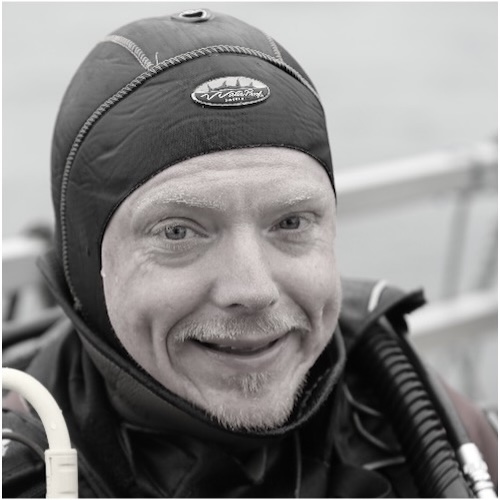
Duncan Ross

Title:  Discovering Submerged Stories  – a personal dive into Britain’s History  

Abstract: Duncan will be sharing his experiences and talking about the journey of discovery that has seen him take part in a string of exciting underwater projects and ultimately led to his Underwater Archaeology Tour of the United Kingdom project.

His book, Discovering Submerged Stories: A Personal Dive into Britain’s History which will be available to purchase at the conference, is the culmination of his love of diving, history, archaeology and writing. The twelve sites covered in Duncan’s book can be seen as a snapshot of the diversity of underwater archaeology beneath Britain’s waters.

Bio: Duncan is a passionate amateur underwater archaeologist with many years’ involvement in the field as an enthusiast, spectator and participant. He is one of countless individuals who make an important contribution to the heritage sector through volunteering. His book Discovering Submerged Stories: A Personal Dive into Britain’s History charts his journey and sheds light on the variety of underwater archaeological sites that span the country. The book is part of his wider, long-term project Underwater Archaeology Tour of the United Kingdom. Duncan has achieved the Nautical Archaeology Society (NAS) Award in Maritime Archaeology and participated in a wide variety of archaeological projects. As well as releasing his first book, he has contributed material to the NAS, the Maritime Archaeology Trust, Cadw, Divernet.com, and SCUBA magazine

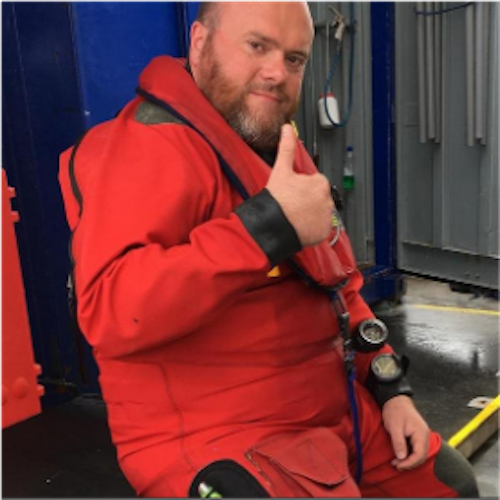
Johan Opdebeeck

Title: Maritime Archaeology in the Netherlands, working with volunteer divers to save our Maritime Culture.

Bio: Johan Opdebeeck (1974) had two master degrees (Ma) in archaeology at the K.U.Leuven before obtaining his Msc in Maritime archaeology at the University of Southampton in 2005. Between 2005 and 2009, he participated in several land based and underwater archaeological excavations around the world. From 2009 onwards, he works as a maritime archaeologist and senior researcher for the Dutch Cultural Heritage Agency.


Captain Gustavo Gutierrez

Colombian Naval Attaché in the UK

Title: Science, Technology and Innovation: Cultural Heritage Governance Model through a Mission-Type Project; San José Galleon

Abstract: The San José Galleon, a Spanish ship from the seventeenth century laden with precious goods, was sunk near Cartagena, Colombia, in 1708. More than three centuries later, its discovery has become the most ambitious submerged cultural‑heritage initiative in the nation’s history.

Today, the Government, the Navy, the academic community, and representatives of civil society are joining efforts to safeguard, study, and develop a strategic plan that ensures this new knowledge is shared openly with present and future generations.

Together, we honour the past as a legacy to protect, for it helps us understand who we were, who we are, and who we may become — as a society and as a region within the global environment.